Stump Grinding in Lakewood, CA
The stump goes below grade, the surface roots go with it, and the hole gets filled. Then you can plant grass, pour concrete, or forget it was ever there.
(562) 502-1431Free estimates. Fully insured crews.
Get a free estimate
Tell us what the tree is doing and we will get you a price. Most quotes go out the same day.
Form powered by Splitforms
- Licensed
- Insured
- Free estimates
- Emergency response
Why the stump has to go
A stump left in a small yard is not just an eyesore. It takes up planting space you do not have on a fifty-foot lot. It keeps sending up suckers, which is a specialty of ficus and Brazilian pepper. It softens and turns into a home for termites and beetles a few feet from the house. And it will stop any hardscape plan cold, because nobody should pour a patio over decaying wood that is going to settle.
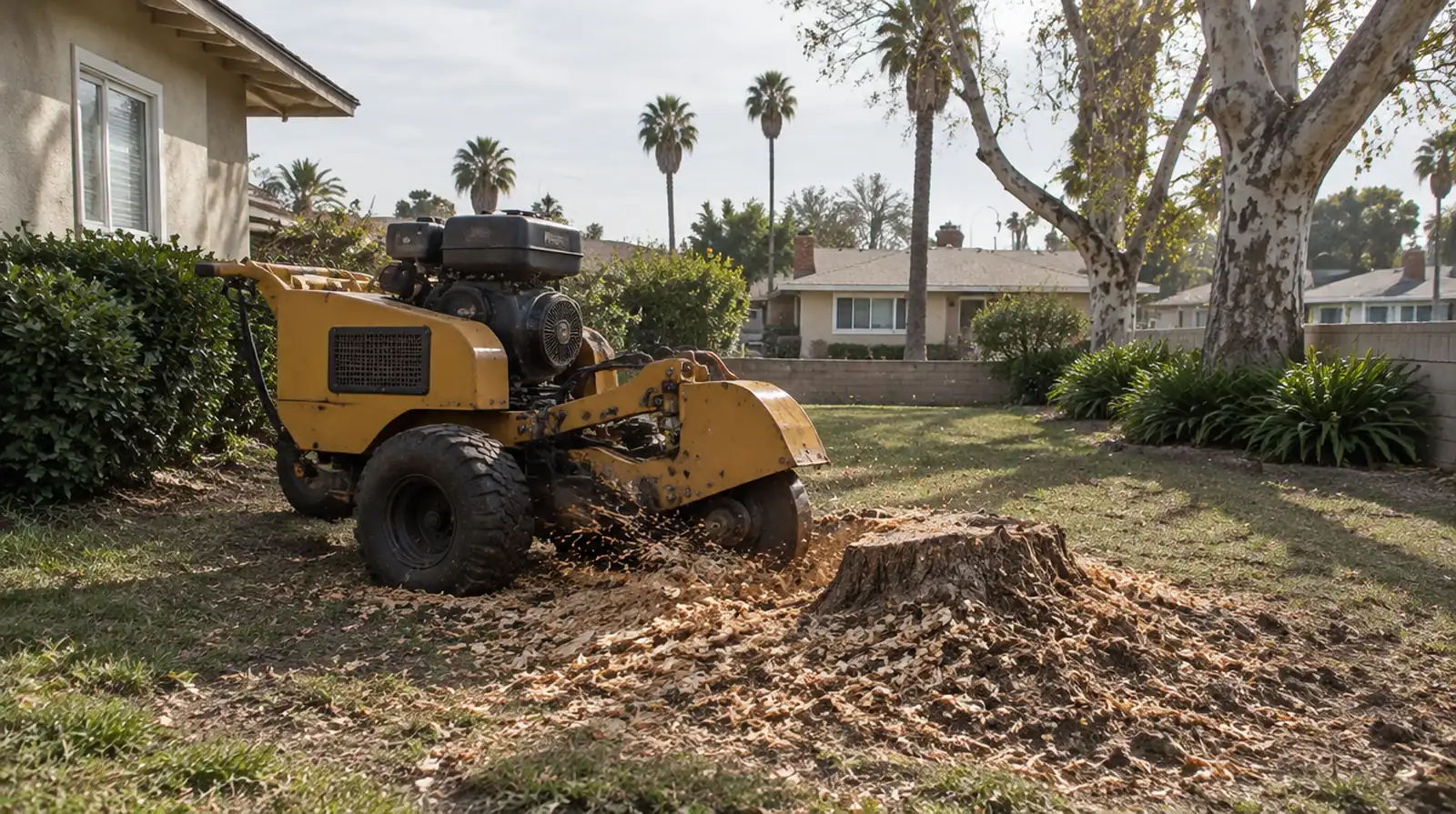
Grinding is the practical answer. Rather than digging the whole root ball out and leaving a crater, a grinding wheel chews the stump and the flare roots into chips a few inches at a time.
How deep we go and why it depends
Standard is six to ten inches below the surrounding grade, which is enough for lawn, sod, or a planting bed. If you are putting a driveway, slab, or footing over the spot, tell us up front and we go deeper and wider so nothing settles under the concrete. If you are replanting a new tree in exactly the same hole, deeper again, and expect to bring in real soil rather than reusing the chips.
Surface roots are usually part of the conversation too. The sweetgums and ficus around here run roots along the top of our compacted soil, and those ropes across the lawn can be ground down at the same time. What we will not do is chase a structural root under a block wall footing or a slab, because that causes more damage than it fixes.
Getting the machine into your yard
This is the part that trips up other companies here. Almost every back yard on these blocks is reached by one side gate, and most of them are narrow. Our walk-behind grinder fits through a standard gate opening, so we do not have to take a fence panel out or tell you the job is impossible.
Before we start, we mark and stay off anything buried in the work zone: sprinkler lines, low voltage lighting, and utility runs. Grinding throws debris, so we screen and mat around the stump to protect stucco, windows, pool tile, and cars. Old stumps in this soil also collect grit and small rock, which is hard on teeth and slows the cut, and that is normal here.
What happens to the chips
One stump makes a surprising volume of chips, always more than people expect. You have two choices and both are fine with us. We can backfill the hole with the chips and rake it level, which costs nothing extra but will settle over a few months and is not a base for planting. Or we haul the chips away and you fill with clean topsoil, which is what you want if grass or a new tree is going in.
Stumps we get called about most
Palm stumps are their own animal. The trunk is fibrous rather than woody and the root mass is a dense ball of thin roots, so grinding is slower but very effective. Ficus stumps regrow enthusiastically if you leave them, so those get ground out fully. Sweetgum and eucalyptus stumps are big at the flare and usually wider than they look at the surface.
If the tree is still standing, this is the second half of a bigger job. We can have the tree taken down first and grind the same day while the equipment is on site, which is cheaper than two trips. The same goes for palm stumps left over from an old removal.
Get a stump price
Measure the stump across the widest point at ground level, tell us how wide the gate is, and we can usually price it without a visit. We work the way our crew handles tight properties generally: protect everything first, then cut. Call (562) 502-1431 or book the grind online.